
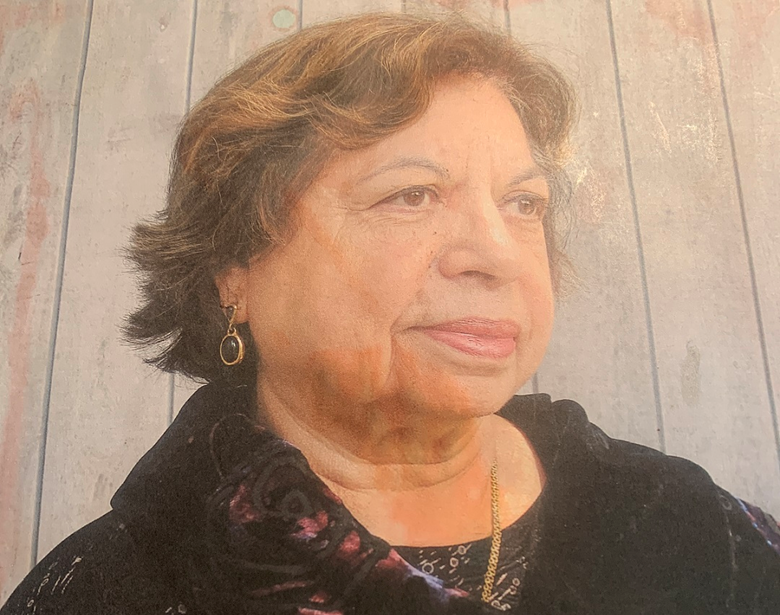
Sumedha Mona Khanna
Dr Sumedha Mona Khanna began her career at the Pan American Health Organization (PAHO) in 1968, as an advisor in maternal health and population dynamics in Trinidad and Tobago, where she served for two years.
WHO’s first female Country Representative
In 1970, Dr Khanna became the first woman to lead a Country Office. “Perhaps one of the most important highlights of my career in WHO was to be the first woman appointed as a WHO country representative in Guyana,” she said. “This gave me an opportunity to coordinate PAHO’s technical assistance in a variety of programmes in the country, including a new initiative for training a new type of rural health worker for Guyana. I believe I opened the possibility for women to be included in professional positions at all levels, including as regional directors and the Director-General. This was a major breakthrough for women in WHO.”
Important contributions in family planning and maternal health
Her next assignment was as Head of Planning and Evaluation in the Health and Population Dynamics Division in PAHO in Washington D.C. From 1977 to 1980, she worked as PAHO/WHO Country Representative in the Jamaica Office that also covered the Bahamas, Belize, Bermuda, Cayman Islands and Turks and Caicos Islands.
One of her major contributions in the region was to introduce family planning within the Maternal and Child Health programmes in the Latin American countries. This was a new initiative as new contraceptive methods had been developed that required special training of health-care workers. “I was the first technical advisor in the field for helping countries introduce family planning services in their maternal health programmes,” recalled Dr Khanna. “New contraceptive methods had been developed in the 1960s, and the Caribbean countries were among the first to provide them as part of their maternal health initiatives.”
In 1980, Dr Khanna served as Chief of the Division of Comprehensive Health Services in PAHO HQ. Her next assignment, starting in 1983, was at WHO headquarters in Geneva, in the Health-For-All Strategy Coordination Unit, first as its Deputy Director and then its Director.
In 1988, Dr Khanna moved to Indonesia as WHO Country Representative, with a special assignment as liaison to the Health Desk of the Non-Aligned Countries. “My assignments in the country, regional and headquarters offices were unique and gave me a good understanding of how WHO works and interacts at all levels,” she said.
Leadership development in public health
Dr Khanna also considers the Health for All Leadership Development Initiative one of her major contributions to WHO. As the Director of the Health for All Strategy Coordination Office, she felt that policy-makers and government officials needed to understand the actions they should take in order to implement the Health for All strategy in their country. During 1985-1988, leadership development programmes were implemented at both global and regional levels. In 1988, WHO technical discussions on Health for All leadership development were held and resulted in a unique declaration on Leadership for Health-For-All, approved by the World Health Assembly.
“Leadership Development in Health was a unique initiative for policy and managerial levels of health and social sectors in the world,” said Dr Khanna. “We created this programme from scratch and developed the content as well as the methods of its implementation at all levels of the health sector. At that time no such programmes existed. I believe it made an important impact on health development and educational institutions.”
Ongoing public health advocacy
While she retired in 1993, Dr Khanna continues her advocacy for public health. In 2020, she was invited by the Government of Guyana to participate in the 50th Anniversary of its National Health Development. “It is a privilege to have the opportunity to serve in WHO. As WHO technical experts you have the privilege to transfer the technical knowledge and expertise to local health officials,” she said.
To the WHO workforce, she stresses that “it is important that you offer technical excellence in the field of health you are assigned. Health care technology and approaches are advancing rapidly now. That means continuing to upgrade your own knowledge and expertise. Your task is to create and transfer this expertise at country level and at the institutions you are assigned.”
Excerpt from https://www.who.int/news-room/feature-stories/detail/celebrating-former-staff-members-on-who-s-75th-birthday
Recent Comments